Showing posts with label 4 stars. Show all posts

Tuesday, March 09, 2021

Review: Slay by Brittney Morris

Title: Slay
Author: Brittney Morris
Publisher: Simon & Schuster BYR
Release date: September 24th 2019
Pages: 323
Genre: Young Adult contemporary/sci-fi(?)
Source: Purchased audiobook through Audible
Add to Goodreads | Puchase from Bookshop

By day, seventeen-year-old Kiera Johnson is an honors student, a math tutor, and one of the only Black kids at Jefferson Academy. But at home, she joins hundreds of thousands of Black gamers who duel worldwide as Nubian personas in the secret multiplayer online role-playing card game, SLAY. No one knows Kiera is the game developer, not her friends, her family, not even her boyfriend, Malcolm, who believes video games are partially responsible for the "downfall of the Black man." But when a teen in Kansas City is murdered over a dispute in the SLAY world, news of the game reaches mainstream media, and SLAY is labeled a racist, exclusionist, violent hub for thugs and criminals. Even worse, an anonymous troll infiltrates the game, threatening to sue Kiera for "anti-white discrimination." Driven to save the only world in which she can be herself, Kiera must preserve her secret identity and harness what it means to be unapologetically Black in a world intimidated by Blackness. But can she protect her game without losing herself in the process?


I LOVED listening to Slay; it's a super fun and unique story with a strong voice and fantastic characters that tackles difficult conversations within an entertaining story!

The characters are what make this novel so great. I loved Kiera; she has a strong voice and a unique but relatable personality. I loved reading about her dynamics with her friends at her predominantly-white school who put her in uncomfortable situations with their ignorance and problematic questions, with her parents, whose respectability politics have kept Kiera from confiding in them about Slay, with her moderator Cicada who later opens up and becomes her friend, her sister Steph, who was probably my favorite character, and her boyfriend Malcolm, whose storyline was very different than I'd expected, in a good way. 

Slay does a fantastic job of addressing social issues and systemic racism without being an "issue book." The racism Kiera has experienced in other video games and the backlash Slay receives are integral to the story, and anti-racist politics are at the heart of the novel, without Slay becoming a book "about" racism. The conversations differences between all of the Black characters demonstrate the complexities of anti-racist politics in a very accessible way.  I also loved the discussion of intersections of anti-racist and feminist politics, especially through the conflicts between Steph and Malcolm. More so than being about racism and anti-Blackness, this novel is grounded in Black culture and celebrates Blackness. This novel would be great to recommend to anyone who might be interested in learning about these issues but doesn't want to read an "issue" book, or even anyone who is simply interested in the video game element and general story but who will also learn something along the way, or of course anyone who is interested in video games, etc. and doesn't fit into the white male geek demographic.

Even though I personally am not a video game person, I loved reading about Slay. I honestly don't know how realistic the game is--I don't know much about game developing, and it seems like the author does, so maybe I am just ignorant of this, but I was under the impression that developing an online game with hundreds of thousands of players would require time and money that a high school student wouldn't have. I've seen others categorize this novel as sci-fi (and some of the technology does seem a little futuristic), so maybe if you read this novel as taking place in the future, that wouldn't be the case anymore, but I just assumed it was a contemporary while reading. Regardless of the logistics, however, reading about Kiera and other characters playing this game was super fun, and especially seeing the different cards that are all grounded in Black culture and celebrating Blackness is so important.

Asides from the creation of this video game, though, there were a few more elements that I just didn't find realistic or had some questions on and that needed more explanation. It felt a bit too convenient that, despite this game being played by Black people all over the world, the important players end up being people important in Kiera's life. Additionally, I was surprised that, when the media discusses whether Slay is "racist" for creating a space exclusively for Black people and excluding non-Black players, a professor of African American Studies agreed that excluding white players is "racist against white people." Maybe I am just biased towards Ethnic Studies scholars, but I can't imagine any African American Studies professor agreeing that racism against white people exists rather than explaining that racism is systemic and that reverse racism does not exist. Of course, we didn't get to know this character very well, so maybe he had a reason not to speak up in this way, but these are just a few points that made me pause and that didn't seem entirely realistic or fully explained.

I loved listening to Slay as an audiobook. I am not an audiobook person, but I've recently given audiobooks another try in order to have something to listen to while going on walks during quarantine; Slay is actually the first audiobook that I've listened to from start to finish since going on road trips with my parents as a child... I loved the narrator who read Kiera's chapters, and the format of having short interspersed chapters about other characters, read by different narrators, worked really well in the audiobook format. This book convinced me to give audiobooks another shot!

I highly recommend Slay to anyone looking for a unique, fun story that celebrates Blackness and addresses a number of important issues! I'm excited to read Brittney Morris's second novel, The Cost of Knowing, which, since I was so late to this party, already comes out next month!

Saturday, September 26, 2020

Review: The Sound of Stars by Alechia Dow

Title: The Sound of Stars
Author: Alechia Dow
Publisher: Inkyard Press
Release date: February 25th 2020
Pages: 432
Genre: Young Adult sci-fi
Source: Purchased
Add to Goodreads | Puchase from Bookshop
Two years ago, a misunderstanding between the leaders of Earth and the invading Ilori resulted in the deaths of one-third of the world’s population. Today, seventeen-year-old Ellie Baker survives in an Ilori-controlled center in New York City. With humans deemed dangerously volatile because of their initial reaction to the invasion, emotional expression can be grounds for execution. Music, art and books are illegal, but Ellie still keeps a secret library. When young Ilori commander M0Rr1S finds Ellie’s library, he’s duty-bound to deliver her for execution. The trouble is, he finds himself drawn to human music and in desperate need of more. Humanity’s fate rests in the hands of an alien Ellie should fear, but M0Rr1S has a potential solution—thousands of miles away. The two embark on a wild and dangerous journey with a bag of books and their favorite albums, all the while creating a story and a song of their own that just might save them both.

I was super excited about this book both because I love Alechia Dow on Twitter and because the human-alien love story sounded super cool. Not only did this book meet my high expectations and tell a great story; every single detail about it is adorable and the book made me smile throughout. 

The best thing about this book are the characters. I absolutely loved both Ellie and M0Rr1s. Ellie is a fantastic character through which to explore the alien invasion; I love how well the novel blends her experience during this alien invasion with her awareness that for her, as a queer Black woman who suffers from anxiety, the world was never really safe to begin with. Her dedication to saving humanity from this alien invasion, and her simultaneous skepticism of humanity being worth saving, make for a really interesting backdrop to this species survival story. M0Rris is a little harder to connect with than Ellie since he's, ya know, an alien, but I still really loved him. The parallels between Ellie's experiences as a Black woman and M0Rris's experiences as a labmade Ilori (a second-class citizen on his home planet) are really well done, especially in conjunction with both of their relationships to their own sexuality. Their romance is adorable, and I loved them together; I do think that it moved a little fast so that part of their connection was difficult to grasp, but I also think that makes sense under the circumstances.

I also absolutely loved Dow's writing style. Dow somehow managed to make this book feel very informal or conversational, in the sense that the first-person narration seems realistic and fun, while simultaneously dropping some gorgeous one-liners on you that will make you stop and marvel. 

This book makes tons of references to books and music, and a lot of those books are YA, which made me so happy. The whole love story starts with M0Rr1S reading Ellie's copy of The Hate U Give, and I don't know what could be better than a love story grounded in love for The Hate U Give. Ellie makes references to characters from lesser-known YA novels, too, which made me so happy to see. Asides from all of these references just being super fun, they felt very affirming both in the sense of establishing YA as "real" literature (whatever that means) and of creating a connection between Ellie and the reader, so every single one of them made me super happy (except for the Harry Potter references which, ya know, didn't age well--but since Dow wrote this novel before She Who Shall Not Be Named ruined our childhoods, I can't really fault her for that). These references made The Sound of Stars read like the most ~YA~ YA novel ever, which I loved.

My only issue with the novel was the pacing. I felt like some parts in the beginning and middle were a little slow, while the ending happened REALLY fast, to the point where I felt a little lost. I'm not sure how to feel about the ending; I loved all the plot twists and how everything came together, but I still have so many questions! I feel like we need a sequel to this novel, but from what I understand, this is going to be a stand-alone...?

I highly recommend The Sound of Stars if you're looking for a sci-fi book that simultaneously explores a number of important issues and will make you smile the entire time you're reading it. Everything about this novel felt very unapologetically YA, so even the things I've critiqued (the pacing of the plot and how quickly Ellie and M0Rr1S fall in love) kind of works and just made me love it even more. I'll definitely be reading whatever Alechia Dow publishes next!

Saturday, September 12, 2020

Review: Midnight Sun by Stephenie Meyer


Title: Midnight Sun
Author: Stephenie Meyer
Publisher: Little, Brown BYR
Release date: August 4th 2020
Pages: 662
Genre: Young Adult paranormal romance
Source: Purchased
Add to Goodreads | Puchase from Bookshop
When Edward Cullen and Bella Swan met in Twilight, an iconic love story was born. But until now, fans have heard only Bella's side of the story. At last, readers can experience Edward's version in the long-awaited companion novel, Midnight Sun. This unforgettable tale as told through Edward's eyes takes on a new and decidedly dark twist. Meeting Bella is both the most unnerving and intriguing event he has experienced in all his years as a vampire. As we learn more fascinating details about Edward's past and the complexity of his inner thoughts, we understand why this is the defining struggle of his life. How can he justify following his heart if it means leading Bella into danger?

This book feels like it should be in a category of its own; any rating would be justified because I absolutely loved and despised this book at the same time. For nostalgia and making my inner 12-year-old happy, this book gets 5 stars; for everything else, probably more like 2 stars. I pretty much hated every second of this book, but hating it made me so happy, and I wouldn't have wanted this book to be any other way.

Being in Edward's head is, in a word, terrible. He is one of the most annoying characters I've ever met. If you thought that Bella's falling in love with a boy she barely knew was bad, she actually seems much more reasonable after reading Midnight Sun because Edward is so much worse. His obsession with Bella is a lot to handle, even though I do think the book does a good job of explaining how the allure of her scent and his inability to read her thoughts create this mysterious appeal. His constant whining and self-hatred are simultaneously annoying and reasonable, since he, ya know, is a monster. Edward appears entirely incompetent and as if he would be completely useless if he wasn't able to read other people's thoughts, and especially watching him learn to understand physical attraction as a confusing and new sensation despite being 104 years old is simultaneously the most annoying and funniest thing about this book. This book did not make me like him whatsoever, but it was extremely fun to despise him while reading.

The ending of this book was so terrible to read from his perspective. It's not surprising, since we know what happens in New Moon, but it was so sad to read the ending of the first book that was so happy in the original but knowing that Edward is planning on leaving. Before reading this book, I was hoping Stephenie Meyer would rewrite the whole series from his perspective, but after reading that ending, I fully understand why she doesn't want to write New Moon from Edward's perspective, and I honestly don't know if I could handle reading it. If you're going to read this book, prepare to be emotionally gutted by the ending.

My favorite thing about this book was finding out more about the vampire world and the things Bella didn't get to see. The more detailed explanation of Alice's vision and Jasper's skills, specifically, were super cool. I loved seeing how the whole family interacted with each other, and how they have thought-conversations with Edward. Everything between the baseball scene and the terrible ending was super fun to read, and I was on the edge of my seat with suspense despite obviously knowing the outcome. Seeing what the Cullens' attempts to protect Bella looked like that we didn't get to see, since Bella wasn't with Edward for most of that, was super cool, and I especially loved seeing the way they worked together and used their individual abilities to make that happen. I wish we had gotten even more insights into the vampire world and their family dynamics!

I was expecting Stephenie Meyer to maybe have updated some elements of the story after all the critiques she's gotten, but... Midnight Sun is just as problematic as Twilight. The appropriation of Indigenous culture is just as bad in this version, and Edward's stalker-like and controlling behavior, his denigration of teenage girls other than Bella, and the generally outdated ideas of gender roles and relationships are even worse than they were in Twilight. In a way, that was frustrating to read again, but, in hindsight, anything else wouldn't have felt authentic, and maybe this can lead to some more conversation and reflection.

This book was terrible for all the same reasons Twilight is bad, and those are the same reasons that I wholeheartedly love this franchise. I think this book is required reading for anyone who loved the series when they were younger; the nostalgia alone makes it worth it, and even the parts I hated I loved to hate.

Whether you love or hate or love-hate Twilight, please consider donating to the Quileute Tribe whose culture Stephenie Meyer appropriated! They have not received any compensation for this widely successful franchise that was built on their culture and legends. Their land is at sea level and some of the tribe's homes have been destroyed by flooding, as well as being located in a tsunami zone, so they are collecting donations in order to move to higher ground. I donated the same amount of money that I spent on this book to somehow compensate for participating in the appropriation of their culture, and I would encourage you to do the same! You can find out more and donate at https://mthg.org.

Wednesday, August 05, 2020

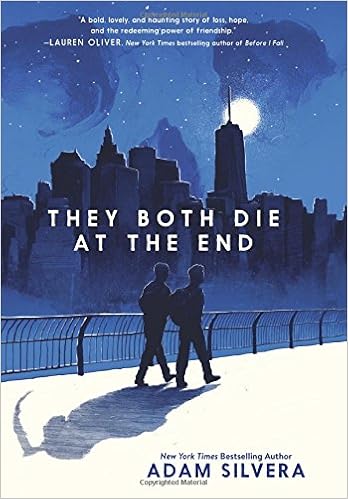
Review: They Both Die at the End by Adam Silvera

Title: They Both Die at the End
Author: Adam Silvera
Publisher: HarperTeen
Release date: September 5th 2017
Pages: 373
Genre: Young Adult contemporary
Source: Purchased
Add to Goodreads | Purchase from Bookshop
On September 5, a little after midnight, Death-Cast calls Mateo Torrez and Rufus Emeterio to give them some bad news: They’re going to die today.

Mateo and Rufus are total strangers, but, for different reasons, they’re both looking to make a new friend on their End Day. The good news: There’s an app for that. It’s called the Last Friend, and through it, Rufus and Mateo are about to meet up for one last great adventure—to live a lifetime in a single day.


I've been meaning to read Adam Silvera's books, and I absolutely love the title (and concept of this one)--I really hate happy endings (I know, what is wrong with me, but I will take a realistic ending that makes me bawl over a happy ending any day), so I was really excited for this one--this novel promises to break your heart, and it really does not disappoint.

While the emotions and the message were what I was expecting, the worldbuilding ended up being very different from what I'd anticipated. I was expecting this to be speculative fiction set in the future, but this book is actually set in an alternate present (in 2016 or 2017, I forget). At first, I was taken aback by that choice--I thought it was confusing and unrealistic that everything in this society is the same as in ours except that the Death-Cast exists. Especially one conversation between Rufus and Mateo, where they talk about what all will be outdated soon, which is entirely accurate for our present day, felt strange to me--how has this society made no other technological strides, but has managed to develop some kind of technology that can infallibly predict when you will die? Especially because the Death-Cast has existed for almost ten years in this alternate universe, and because society has developed lots of new businesses, such as the Last Friend App and lots of activities designed for Deckers (people living out their last days), it just seemed strange to me that everything else would be exactly the same in this world. After a while, though, I got used to this idea, and I appreciate that this alternate present, more so than a dystopian future setting, allowed Silvera to represent the lives of Latino youth in present-day New York City, in a way that really shaped the story.


Regardless of when exactly the Death-Cast were to happen, though, I wish there had been some more discussion of how exactly these predictions work. I understand that the novel focuses almost exclusively on Mateo and Rufus and is more about how Death-Cast impacts individual lives than about how it works, and it makes sense that we wouldn't know much since the characters themselves don't know how this technology works. But I couldn't help but question the practicalities of this technology. For example, I kept wondering how much receiving that Death-Cast call might impact what you do that day and therefore whether or not you die. The characters continuously mention that Death-Cast is infallible, and that there is absolutely no way to escape death once you receive the call. At the same time, though, there is a scene where one of the characters learns about world history BDC (Before Death-Cast) in school, and is asked to imagine how events such as 9/11 may have played out differently if Death-Cast had already existed, but how that would look like is never explained. If so many people who work in the same place were to receive the call, wouldn't many of them not have gone to work that day? But then, since Death-Cast is infallible, would they just have died some other way instead? While of course Death-Cast can allow you to live your last day to the fullest and can give you a chance to say goodbye, I didn't quite understand how it would impact historical events in any way. Additionally, I found the concept that you always get the call between midnight and 3am kind of strange. I understand the practicalities of this, of course--the Death-Cast employees receive a list of people to call at midnight, and then begin to make their way through the list until they finish at 3am. But, what about the people who die at, say, 1am? They might never be notified, which didn't seem to fit with the way the characters talk about not receiving the call as a surefire way to know you won't die today. While these are just details, I do wish that there had been some more exploration of how choice and fate relate in this universe, and how your choices might impact whether and how you die on a certain day.


Nonetheless, this novel is not so much about constructing a logical alternate universe, and more so about the characters and a message that applies in our universe as well. And all of that, I absolutely loved. I loved the writing and the pacing of the whole novel--the suspense was really well-done, and I was consistently paranoid about how either character could die at any moment. (This novel might not be ideal for anyone who already struggles with death-related anxiety--this same paranoia about Rufus and Mateo dying at any moment reappeared in my dreams for the next couple of nights after finishing this novel.) Even asides from the looming death of the two central characters, this is an emotional read; both Rufus and Mateo's families have tragic stories,  and the flashbacks to their circumstances and their contemporary goodbyes made me tear up throughout the novel. 


I also really loved how, in addition to switching back and forth between Mateo's and Rufus's PoVs, the reader got intermittent chapters from secondary characters or even complete strangers, who later turned out to be vaguely related to the central storylines. Those chapters really demonstrated how all of our stories connect and how seemingly small choices can really make an impact, and worked really well for the novel's message about making the most of our lives while we can.


***This next paragraph is vaguely spoiler-y, although you wouldn't be surprised by this "twist" if you've read Silvera before.***

I still haven't decided what to make of the love story or whether or not I'm sold on it. I was expecting the romance element because I know Silvera usually writes M/M love stories, but if I had come into this novel without those expectations, I think Rufus's and Mateo's first kiss (or Rufus's first suggestions that this might happen) would have taken my by surprise and it would have felt a little random in the context of the rest of the story. Part of me really likes the idea of not a love story, but something that could have been a love story if the two had had the opportunity to know each other for longer. So the elements that framed their relationship in that way, I liked, but some other parts I felt were a little overdone and a little too insta-love-y. Although I guess even those parts aren't unrealistic, since both characters know they are going to die and this is their only/last chance at love. Another part of me, though, just doesn't see Rufus and Mateo together in that way; to me, Rufus seemed like more of a big brother to Mateo before the romantic element to their relationship was introduced. It might just be my own heteronormativity that didn't allow me to see these two as romantic partners for one another (I think most people would have expected romance from a YA novel with the same concept about a boy and a girl), but I just didn't see them as compatible. I also think it could have been really cool for this novel to center a friendship between two queer boys (Rufus identifies as bisexual, and I've seen lots of other people label Mateo as gay, but I don't remember Mateo ever actually identifying as anything?). Despite all of this, I don't really mind the romantic storyline because it feels realistic, under the circumstances.

While I did have a lot of questions, I really loved this book. If you're looking for a thought-provoking  tearjerker with a unique concept, you should definitely check out They Both Die at the End. I will definitely be reading Silvera's other novels!

Monday, July 13, 2020

Review: Let's Talk About Love by Claire Kann


Title: Let's Talk About Love

Author: Claire Kann
Publisher: Swoon Reads
Release date: January 23rd 2018
Pages: 304
Genre: Young Adult contemporary
Source: Purchased
Add to Goodreads | Puchase from Bookshop
Alice had her whole summer planned. Nonstop all-you-can-eat buffets while marathoning her favorite TV shows (best friends totally included) with the smallest dash of adulting--working at the library to pay her share of the rent. The only thing missing from her perfect plan? Her girlfriend (who ended things when Alice confessed she's asexual). Alice is done with dating--no thank you, do not pass go, stick a fork in her, done. But then Alice meets Takumi and she can't stop thinking about him or the rom com-grade romance feels she did not ask for (uncertainty, butterflies, and swoons, oh my!). When her blissful summer takes an unexpected turn and Takumi becomes her knight with a shiny library-employee badge (close enough), Alice has to decide if she's willing to risk their friendship for a love that might not be reciprocated--or understood.  

This is such an important book! I don't know many YA books (or any books) about asexual teens, and definitely none about a Black biromantic asexual girl, so the sheer existence of this novel is great to see. When you add a unique and entertaining writing style and a lovable main character into the mix, you end up with an equally fun and important novel.

I loved Alice's character and the writing style of this novel, which are hard to separate because, even though the novel is written in third-person, the writing is very much shaped by Alice's personality. I would love to be Alice's friend; even though she makes her fair share of mistakes, she is one of the most endearing characters I've read about in a while. Her strong personality, penchant for all things cute and romantic, and pop culture-influenced way of speaking closely shape the writing, which is very informal, using internet-speak (for lack of a better term?) and tons of parentheses for additional commentary. I could see how this writing style would get on some people's nerves, but I loved it!

I loved the secondary storylines of this novel, primarily the exploration of Alice's relationship with her friends and her parents. Both her friends and her parents were infuriating at times, but their relationships were definitely realistic. I especially liked the exploration of Alice's jealousy of the relationship between Feenie and Ryan, her two best friends who are engaged to each other--even though Feenie pissed me off throughout the novel, to be honest. Why was she mad at Alice for leaving a party after she went upstairs to go have sex with Ryan (honestly, do you really need to have sex with your fiancé, whom you live with, in someone else's bedroom while you are at a party with both him and your best friend??), especially when Alice was cornered by a scary abrasive guy at this party after her friends left her? I was not the biggest fan of the way Feenie was not held accountable for this and the way the novel made it seem like both Feenie and Alice made mistakes, because yes, but.... I was 100% team Alice. But regardless, the exploration of these conflicts was realistic and well done.

Since I'm not asexual, I cannot judge the accuracy of the portrayal of asexuality, but I will say that I learned a lot about asexuality by reading this novel, and I think someone who doesn't know a lot about asexuality would really benefit from Alice's explanations of her sexuality. I was especially interested in the way Alice navigated her relationships with partners who are not asexual, and I'm not sure what to make of the novel's take on this. In the beginning, Alice's ex-girlfriend Margot breaks up with Alice because Alice does not want to have sex with her and Margot wants to be with someone who actively desires her. In the process, Margot does say some ignorant things about it being unnatural not to desire sex, which is of course aphobic, but asides from these statements, I don't know how to feel about the novel's vilification of her character. I do think that sexual incompatibility is a legitimate issue and that wanting to be with someone you are sexually compatible with makes sense. Even though I of course understand that Alice shouldn't need to have sex just to please her partner, I also don't know if you can expect an allosexual person to give up sex in order to date someone asexual, especially if feeling sexually desired by their partner is important to them. To me, this seemed like a legitimate reason for Alice and Margot to not be compatible and to break up, so I was a little taken aback by the novel's vilification of Margot's decision as a refusal to accept Alice as she is. Is this just my allosexual bias/privilege talking? This seems like a complicated issue with no easy answers to me.

I also had mixed feelings about Alice's and Takumi's relationship. On the one hand, I thought they were super cute together, and I loved the exploration of romance as separate from sex. On the other hand, their relationship moves really fast, and did seem a little insta-love-y to me--or maybe not insta-love, but insta-we are best friends together 24/7 now, since they do take a while to actually get together. And, honestly, if it hadn't been for the way this works in conjunction with the exploration of asexuality, this level of romance would have been a little too much to handle. In some ways, though, it felt like the novel was self-aware in this sense, since Feenie calls Alice out on abandoning her friends and spending every day with Takumi as soon as they meet, so maybe this was an intentional exploration of Alice's character. Regardless, I did like the romance; it's very sweet, even if it moves very quickly. I do wish, though, that the ending had been less rushed--especially since Takumi's handling of Alice's asexuality is contrasted to Margot's, I would have liked to see how they handle this as their relationship progresses. Takumi (who is allosexual) saying he's okay with sex not being a part of your relationship seems easy enough at first, but harder to actually deal with in a long-term relationship, so especially because a nuanced exploration of this seemed to be missing from the beginning of the novel, I would have liked to see this discussed in more detail at the end. 

Regardless of these smaller issues, this novel definitely sparks a lot of interesting conversations about asexuality (not to mention its discussion of race, feminism, and biromanticism). Alice is a lovable character, and Kann's writing style and voice are very entertaining. I'm definitely going to check out Kann's newer novel soon!

Tuesday, July 07, 2020

Review: Blanca & Roja by Anna-Marie McLemore

Title: Blanca & Roja

Author: Anna-Marie McLemore
Publisher: Feiwel & Friends
Release date: October 9th 2018
Pages: 375
Genre: Young Adult; magical realism; retelling
Source: Purchased
Add to Goodreads | Puchase from Bookshop
The del Cisne girls have never just been sisters; they’re also rivals, Blanca as obedient and graceful as Roja is vicious and manipulative. They know that, because of a generations-old spell, their family is bound to a bevy of swans deep in the woods. They know that, one day, the swans will pull them into a dangerous game that will leave one of them a girl, and trap the other in the body of a swan.

But when two local boys become drawn into the game, the swans’ spell intertwines with the strange and unpredictable magic lacing the woods, and all four of their fates depend on facing truths that could either save or destroy them. 


Anna-Marie McLemore's books are one of a kind. Their books took a little while to grow on me--when I first read When the Moon Was Ours, my first McLemore book, I had no idea what to make of it, other than thinking it was beautiful and confusing, since their books are so different from what I'm used to reading. But if you go in with no expectations and just accept the queer, magical realism-influenced retellings McLemore writes for what they are, I think there's no way not to love them.

Blanca and Roja are the youngest daughters in the del Cisne family, a family that was cursed by swans a long time ago to always have two daughters, one of whom will survive as a girl while the other is turned into a swan. While we get some speculation as to how this came about, there is no explanation of this "magic"; you just have to accept that this is the way things are for Blanca and Roja. And even though this might seem like a strange idea for a story, it makes for a very compelling read that allows McLemore to explore sisterly love, colorism, gender identity, and much more.

I never know what how to review the characters of McLemore's novels, because I wouldn't say that I like any of them or that any of them are realistic or fully developed, but those stock terms just don't really apply to McLemore's stories. Blanca and Roja just are, and it works. The secondary characters are similarly clouded by mystery and magic, and I loved the way the narration switches between the four central characters.

McLemore's unique story allows for a powerful exploration of how colorism deeply shapes a small, predominantly white town's perception of this Latinx family, as well as Latinx communities themselves. Blanca, with her blonde hair and golden complexion, can sometimes pass for white, and abides by societal expectations, while Roja, with her brown skin, red hair, and rebellious attitude, is feared and reviled by the town. McLemore beautifully explores how deeply these differences shape their experiences, their relationship with one another, and their relationship with their parents. My only issue with the character building is the family's assumption that because Blanca is the more conventionally beautiful (by white beauty standards), more demure and "respectable" sister, that she would be spared by the swans and that they would take Roja, the rebellious sister, instead. Wouldn't the swans want Blanca, the sister who is perceived as "better," especially because she would fit in better with the white swans? I was confused by this element of the world building.

McLemore also weaves explorations of gender and queerness into their stories in a very unique way. Page, Blanca's love interest, is a non-binary transgender boy who uses both male and female pronouns. While Page's gender is not the central topic of the novel, the text makes space for some important conversations between Blanca and Page exploring nonbinary identities.

What really stands out about this novel, as with all of McLemore's novels, is the writing. Even in the beginning, when I honestly had no idea what was going on, I enjoyed every single one of McLemore's beautiful words; their writing is the kind you can get lost in regardless of the story--even though they always do lead you back to a fantastic story.

If you enjoy magical realism, or if you're looking for something different, or if you appreciate beautiful writing, or if you like fairy tale retellings, or if you like queer books (so... basically everyone?), I highly recommend this book! I need to catch up on the McLemore novels I haven't read yet.

Saturday, June 27, 2020

Review: Coming Up for Air by Miranda Kenneally

Title: Coming Up for Air
Author: Miranda Kenneally
Publisher: Sourcebooks Fire
Release date: July 4th 2017
Pages: 293
Genre: Young Adult contemporary
Source: Purchased
Add to Goodreads | Puchase from Bookshop
All of Maggie’s focus and free time is spent swimming. She’s not only striving to earn scholarships—she’s training to qualify for the Olympics. It helps that her best friend, Levi, is also on the team and cheers her on. But Levi’s already earned an Olympic tryout, so Maggie feels even more pressure to succeed. And it’s not until Maggie’s away on a college visit that she realizes how much of the “typical” high school experience she’s missed by being in the pool.

Not one to shy away from a challenge, Maggie decides to squeeze the most out of her senior year. First up? Making out with a guy. And Levi could be the perfect candidate. After all, they already spend a lot of time together. But as Maggie slowly starts to uncover new feelings for Levi, how much is she willing to sacrifice in the water to win at love?


What a fantastic conclusion to this series! I love the characters, the romance, the writing, and the sports talk in each of these books, and Coming Up for Air has all of these Hundred Oaks staples and more.

Maggie was relatable and likable like all of the Hundred Oaks protagonists. I loved how driven and passionate she is without anyone else pushing her into being a successful swimmer, and her friendships and romance are just as fun to read about. The romance is adorable as always; I didn't mind the predictable-ness one bit, and was rooting along for this couple throughout the entire novel. Kenneally's books are always a safe bet if you want some adorable romance that will distract you from the real world and make you happy to go along on these characters' journeys.

In all of the Hundred Oaks books, I've loved reading about each character's passion and competitiveness in whatever each of them is good at, and this one is no exception. I loved reading about Maggie's dedication to swimming, being along for all the ups and downs of her swim meets and training, and getting immersed in all the technicalities and drama of these young athletes' lives. I never get how Kenneally can get me so invested in these technicalities--if you asked me if I wanted to learn about the specific times young swimmers need to meet, how exactly they train to shave second off their times, etc., I would definitely say no--but she manages to integrate these technicalities into the realities of the lives of the characters you grow to love in a way that makes you want to know everything about a topic you've never cared about.

One thing that stood out about this book compared to the previous Hundred Oaks books was the emphasis on sexuality. Even if it was cringe-worthy to read about the way Maggie expresses them sometimes, it was great to see a female character who is so outspoken about her sexual desires. There are a lot of hot and heavy scenes, and even if the explicit message is mainly about it being okay to evolve at your own pace (i.e. to not have had sex yet), the general sex-positivity was great to read about.

Overall, a fantastic conclusion to a companion series of which I loved each one. Even though we always just get one book per character and it's a little different from saying goodbye to a group of characters and stories you loved, I am still a little sad we won't get any more Hundred Oaks books. But I can't wait to see what Miranda Kenneally does next!

Saturday, June 20, 2020

Review: That's Not What Happened by Kody Keplinger

Title: That's Not What Happened
Author: Kody Keplinger
Publisher: Scholastic
Release date: August 28th 2018
Pages: 336
Genre: Young Adult contemporary
Source: Purchased
Add to Goodreads | Puchase from Bookshop
It's been three years since the Virgil County High School Massacre. Three years since my best friend, Sarah, was killed in a bathroom stall during the mass shooting. Everyone knows Sarah's story--that she died proclaiming her faith.

But it's not true.

I know because I was with her when she died. I didn't say anything then, and people got hurt because of it. Now Sarah's parents are publishing a book about her, so this might be my last chance to set the record straight . . . but I'm not the only survivor with a story to tell about what did--and didn't--happen that day.

Except Sarah's martyrdom is important to a lot of people, people who don't take kindly to what I'm trying to do. And the more I learn, the less certain I am about what's right. I don't know what will be worse: the guilt of staying silent or the consequences of speaking up . . .


I made the mistake of reading this book without taking a look at the description of it beforehand (if I already know I like an author, I will read their book without looking at any info on it because I like to go into a book not knowing anything), so I was expecting another fun, light-hearted read like the previous Kody Keplinger books I've read. And even though I had been in the mood for a fun, fluffy read, and that is absolutely not what I got with That's Not What Happened, it was a great read nonetheless, and I'm excited that Keplinger is trying something a little new!

That's Not What Happened is definitely an emotional read. I've read a few YA takes on school shootings, but none that were primarily about its survivors a few years after the fact. Being set so much later than the actual event does not make it any less heart-breaking; seeing how much the survivors are still suffering from having lost their friends and witnessed this traumatic event was a unique take on this issue and just as emotionally powerful. 

I'm split on what to make of the premise of this novel, which seems to be a fictionalized account of Cassie Bernall and Rachel Scott who were seen as Christian martyrs after Columbine. If the novel didn't have this resemblance to these real-life victims of a school shooting, I would have loved this story and its discussion of religion. The novel isn't explicitly critical of religion, but Christianity is not exactly portrayed in the best light, since many of the very religious characters are complete hypocrites who mistreat two young girls when they speak out against the story they've been holding onto. Parts of this seemed unrealistic to me--would they literally run a girl and her family out of town for speaking up and saying that part of the story they believe in is not true??--, but I don't know too much about small religious towns, so maybe I'm just naive. It definitely encourages an interesting discussion of organized religion.

However, since it does share this resemblance to these real-life people, I wasn't sure how to feel about this. Sarah's family, who seem to be a fictional version of Rachel Scott's family, are not portrayed particularly positively, which could be seen as disrespectful (since, to my knowledge, the real-life girls' declarations of faith have not been disproven?). To me, this didn't really take away from my enjoyment of the novel, but it does feel a little iffy thinking about it afterwards. 


Asides from this potentially problematic premise, I loved everything about this book. Lee is a great character; she's a little oblivious at times, and stubborn about insisting that others' mourning should look like hers and refusing to understand why it might not, but definitely a realistic and lovable character. The cast of Lee's friends/fellow survivors is also well done, and I especially loved the romance. Lee is asexual (which I don't think I've ever seen in YA before), and I really liked the way the discussion of this was integrated into the romance in ways that respected asexuality as a legitimate identity, introduced you to some of the issues asexual people might face while dating, and still made for a swoonworthy romance.

This was a very enjoyable read on many levels, and, even if the premise might be a little problematic, it would make for some very interesting discussion material!


Sunday, May 24, 2020

Review: Adam by Ariel Schrag

Title: Adam
Author: Ariel Schrag
Publisher: Mariner Books
Release date: June 10th 2014
Pages: 302
Genre: Young Adult contemporary
Source: Purchased
Add to Goodreads | Puchase from Bookshop
When Adam Freedman -- a skinny, awkward, inexperienced teenager from Piedmont, California -- goes to stay with his older sister Casey in New York City, he is hopeful that his life is about to change. And it sure does.

It is the Summer of 2006. Gay marriage and transgender rights are in the air, and Casey has thrust herself into a wild lesbian subculture. Soon Adam is tagging along to underground clubs, where there are hot older women everywhere he turns. It takes some time for him to realize that many in this new crowd assume he is trans -- a boy who was born a girl. Why else would this baby-faced guy always be around?

Then Adam meets Gillian, the girl of his dreams -- but she couldn't possibly be interested in him. Unless passing as a trans guy might actually work in his favor...

This book was WILD. Wow. 

I know a lot of people took issue with this premise (especially once the movie version came out), but I think the story of a cis boy pretending to be trans is a fascinating perspective from which to explore trans issues--as long as you make clear that of course, pretending to be trans is absolutely not okay. So I was really excited to read this book to see how and if it would do that. And even though this was a super fun book to read, I'm still on the fence on whether it does this clearly enough.

Adam, in the beginning of the novel, is truly terrible. He is frustrated at his lack of sexual experience and blames women for this. Asides from the whole pretending-to-be-trans thing, he and his disgustingly homophobic and pervy friend spy on his sister (!!!???) while she is having sex with her girlfriend. He is super ignorant when it comes to queer and trans issues, and makes a number of transphobic comments.

But, I actually liked the fact that he was terrible in the beginning of the novel. While we are starting to get more and more novels about queer characters struggling with other people's homophobia/transphobia, we don't have a lot of books about homophobic/transphobic characters addressing their own prejudices and educating themselves about queer issues, and that can be a really powerful thing to read about. Reading about Adam learning so much about trans issues--even though it's for the completely wrong reasons--I think could be really useful for someone who isn't very well versed in queer and trans issues.

I also really loved the depiction of queer spaces. Adam and his group of actually queer friends go to queer sex clubs, a gay marriage rally, and a number of queer parties and gatherings, and the depiction of this subculture was much more explicit than what we are used to in YA, which I think can also be really powerful.

Finally, I thought the parodic depiction of white queer communities were really entertaining and powerful. Adam joins a community of almost exclusively white queer people who are hyper-politically correct and constantly trying to be more radical and to think of the least privileged queer people, all while ignoring the lived experiences of queer people of color. Adam--despite all of his shortcomings--comments on these discrepancies that make for a productive engagement with whiteness in queer activism. I was really disappointed that the movie completely erases this element of the novel, since this to me was one of the most powerful elements.

I was really torn on what to make of this novel's depiction of sex. This novel includes some of the most graphic sex scenes I have ever read in a YA novel, and it discusses in detail how Adam straps down his actual penis in order to strap on a dildo in order to have sex with Gillian. On the one hand, pushing the boundaries on what level of sexual explicit material is acceptable in YA is really powerful, especially because of this discussion of non-normative sex acts such as the use of sex toys and the discussions around queer trans people's sexual pleasure that go along with it. On the other hand, the novel never really addresses the fact that all of the sexual interactions between Adam and Gillian, during which Gillian thinks she is having sex with a trans boy, are a clear violation of consent. There is one scene at the end that is especially icky in terms of consent. This novel really pushes the boundaries on what is acceptable in YA--in ways both good and bad.

***THIS PARAGRAPH CONTAINS SPOILERS***
Even though I thought I liked where the novel was going, I was really frustrated by the ending. I cannot believe that Gillan stays with Adam after finding out that he is not trans. I felt like the novel would have needed to punish Adam (as bad as that sounds) in some way for pretending to be trans and for violating consent with Gillian in order to really demonstrate to readers that these choices are reprehensible. By having Gillian forgive Adam, the novel, if not condoning his actions, makes the case that they are forgivable and understandable, which really detracted from the novel's message. And then, the very ending, in which, after Adam and Gillian break up, Gillian starts dating another cis boy... As a declaration of the legitimacy of bisexuality (the way it's framed in the movie), this could have been an important point to make, but because this is never discussed, it veered into iffy turning-the-lesbian-straight territory.

Adam is one of the most shocking YA novels I've ever read, in ways good and bad. While I didn't love everything about it, and I really wish the ending had taken Adam to task for his actions more explicitly, this novel opens up a lot of important conversations and pushes queer YA in new directions. Plus, its shock factor makes it a super fun read.


Wednesday, July 06, 2016

Review: How to Keep Rolling After a Fall by Karole Cozzo

Title: How to Keep Rolling After a Fall
Author: Karole Cozzo
Publisher: Swoon Reads
Release date: August 2nd 2016
Pages: 272
Genre: Young Adult contemporary romance
Source: NetGalley - I received a free eGalley of this book from the publisher in exchange for an honest review. Thanks!
Add to Goodreads | Puchase from Amazon
The party was at her house. The photos were posted to her Facebook account. That's all the evidence anyone needed to condemn Nikki Baylor for a cyberbullying incident that humiliated a classmate and nearly resulted in the girl's suicide. Now Nikki's been expelled from her old school, her friends have abandoned her, and even her own parents can't look her in the eye. With her plans for the future all but destroyed, Nikki resigns herself to being the girl everyone hates - almost as much as she hates herself. But then Nikki meets Pax, a spirited wheelchair rugby player who knows what it's like when one mistake completely shatters your life. Refusing to judge her because of her past, he shows her that everyone deserves a second chance... and everyone deserves to be loved.
My rating: 4 out of 5 stars

Lately I've been struggling with whether I still want to read as much YA as I used to. I've been reading more adult books, and the last couple of YAs I read just didn't impress me all that much; some of them were cute, entertaining reads, but there hasn't been anything I really loved, and I was wondering whether I'm just too old for YA. This is why I'm so glad I picked up How to Keep Rolling After a Fall; it reminded me of everything I love about YA.

I loved the premise of How to Keep Rolling After a Fall; it reminded me a little of Tease by Amanda Maciel, another book I loved. Nikki is an intriguing character; I love when we get to see a perspective that's different from the typical nerdy, unpopular MC. Nikki shouldn't be an easy character to like, but, as wrong as this sounds, I understood her reasoning and related to her decisions. Nikki is especially vulnerable in her relationship with her parents, and I loved seeing the growth in those relationships explored throughout the novel. I also loved Sam, a victim of bullying at her new school whom Nikki befriends; this is another relationship that worked really well along with Nikki's personal growth.

But of course, none of these relationships that Nikki has with other people compare to what she has with Pax; I absolutely loved him. I think this is the first book I've read with a differently abled person as a love interest (which is a shame, really), so I loved that this is explored in How to Keep Rolling After a Fall. Luckily, Pax isn't only characterized as a guy in a wheelchair; I loved everything about his personality. Pax and Nikki are so cute together, they have great chemistry, and they're actually good for each other. They have problems, too, of course, but those didn't feel like silly drama that could've been easily avoided (which plenty of other fictional couples have); their conflicts make sense and are actual issues the two of them need to work through. I just loved everything about their relationship.

I'm not really sure how to explain my love for this book; Karole Cozzo just sweeped me off my feet with her writing. The style isn't necessarily what I would call beautiful, but it flows nicely and works perfectly for this story. It reads super quickly; I finished this book in a day and didn't even notice the time passing. Karole Cozzo's is the type of writing you can read forever and that really lets you get lost in the story and the characters.

My one complaint would be that, at the end, things are wrapped up a little too quickly. Maybe this is just because I didn't want the book to end, but I really wanted to see Nikki and Pax continue to navigate the problems in their relationship and to see how exactly they make it work. I also wanted to see some more development in Nikki's relationship with her ex-best friends and with Taylor. But really, this might have just been because I wanted to remain within Nikki's world and never stop reading.

I'm so glad I decided to pick up How to Keep Rolling After a Fall, both because it's such a great story and because it reminded me of what I love about YA, and about reading in general. With immersive writing, unique characters that really come to life, and a story that I didn't want to end, I absolutely loved How to Keep Rolling After a Fall. I'm going to need to check out Karole Cozzo's debut, How to Say I Love You Out Loud, as soon as possible, and I can't wait to see what she publishes next!

Monday, June 27, 2016

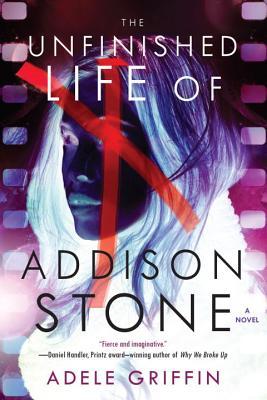
Review: The Unfinished Life of Addison Stone by Adele Griffin

Title: The Unfinished Life of Addison Stone
Author: Adele Griffin
Publisher: Soho Teen
Release date: August 12th 2014
Pages: 256
Genre: Young Adult contemporary
Source:  I received a free advance copy of this book from the publisher in exchange for an honest review. Thanks!
Add to Goodreads | Puchase from Amazon

National Book Award-finalist Adele Griffin tells the fully illustrated story of a brilliant young artist, her mysterious death, and the fandom that won't let her go.
From the moment she stepped foot in NYC, Addison Stone’s subversive street art made her someone to watch, and her violent drowning left her fans and critics craving to know more. I conducted interviews with those who knew her best—including close friends, family, teachers, mentors, art dealers, boyfriends, and critics—and retraced the tumultuous path of Addison's life. I hope I can shed new light on what really happened the night of July 28.
—Adele Griffin
My rating: 4 out of 5 stars


To be honest, I didn't realize this book was fiction after I had finished it and looked it up. While reading, I was convinced Addison Stone was a real person, and even when something seemed far-fetched, I didn't mind because I thought it was all true. I don't know if that means I'm gullible or that the book is just really well-done, or maybe some of both. 

The Unfinished Life of Addison Stone is written entirely in interviews with people who knew Addison. This sounds like something I wouldn't enjoy at all; sounds too formal and like it wouldn't have enough of a narrative for my tastes. But it works surprisingly well. Even though they sound like real interviews (albeit edited by a better writer), they are organized in such a way that they actually tell a story. The writing is what makes it work; it's gripping and reads quickly, and I didn't want to put the book down.

The characters are fascinating. Even though she's never actually present in the novel, Addison has an energy that jumps off the page and made me want to know everything about her. At times, I thought her perfection and instant fame were overdone, but it makes sense within the framework of the book. I also loved Lulu, Addison's best friend from home, and all the characters she meets on the NYC art scene.

Finding out none of this is actually really afterwards kind of changed my perspective. On the one hand, it makes me more critical of things like Addison being too unrealistically brilliant and instantly famous. But on the other hand, it adds another dimension to the story. Adele Griffin is writing about a fictional Adele Griffin who did all of this research on Addison Stone. And since fictional Adele Griffin says she briefly met Addison on one of the classes she taught and became obsessed with finding out everything about her after her death, of course all the interviews are influenced by her own obsession, so this could work as a reason for why Addison so idealized in the story. The real Adele Griffin commenting on fictional Adele Griffin's one-sided perspective on Addison adds a whole new layer of complexity to the novel.

I've read a lot of negative reviews for this one explaining how they couldn't get past how much of a cliche Addison is, being so exaggeratedly beautiful and talented. And she definitely is, but I didn't really mind because she is so mesmerizing, and the unique format makes sure this book is far from cliched. Strange, fascinating, and unique, I really enjoyed The Unfinished Life of Addison Stone, and I recommend it to anyone who's looking for something new and different.

Monday, June 13, 2016

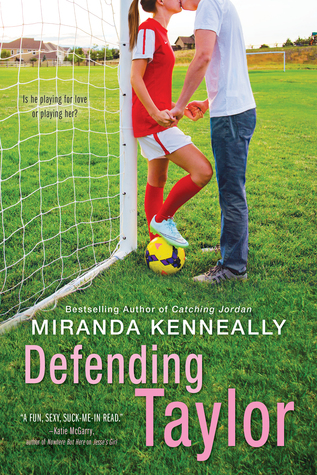
Review: Defending Taylor by Miranda Kenneally

Title: Defending Taylor
Author: Miranda Kenneally
Publisher: Sourcebooks Fire
Release date: July 5th 2016
Pages: 304
Genre: Young Adult contemporary romance
Source: NetGalley - I received a free eGalley of this book from the publisher in exchange for an honest review. Thanks!
Add to Goodreads | Puchase from Amazon
Captain of the soccer team, president of the Debate Club, contender for valedictorian: Taylor’s always pushed herself to be perfect. After all, that’s what is expected of a senator’s daughter. But one impulsive decision—one lie to cover for her boyfriend—and Taylor’s kicked out of private school. Everything she’s worked so hard for is gone, and now she’s starting over at Hundred Oaks High.
Soccer has always been Taylor’s escape from the pressures of school and family, but it’s hard to fit in and play on a team that used to be her rival. The only person who seems to understand all that she’s going through is her older brother’s best friend, Ezra. Taylor’s had a crush on him for as long as she can remember. But it’s hard to trust after having been betrayed. Will Taylor repeat her past mistakes or can she score a fresh start?
My rating: 4 out of 5 stars

It's no secret I love the Hundred Oaks series, especially the first couple of books. The last book, Jesse's Girl, didn't impress me quite as much as the earlier ones, and neither did Defending Taylor, but they're both still stellar additions to the series. I loved everything about Defending Taylor, but it just didn't resonate with me the way some of Miranda Kenneally's previous books did.

Taylor is a very unique character. She's a pretty typical YA MC in how driven and smart she is, but her background and her decisions before and during this book make her stand out. She's not always easy to like because her naivete and privilege do show at times, but I still liked her most of the time. Despite her privilege, she's going to a relatable character for overachieving teens under a lot of pressure to succeed. I especially loved how tough she is and how she always speaks her mind, especially in regards to soccer and her relationship with Ezra. I had some issues with how judgmental and hypocritical she is about some things (like when she talks about drugs, condemning the guy who asks her for Ritalin, when she's been taking Adderall, which is almost the same thing), but I liked her nonetheless.

And Ezra, I absolutely loved. One of my favorite things about Miranda Kenneally's books is that they often have older, out-of-high-school love interests, which doesn't happen often in YA. Ezra is Taylor's older brother's best friend, which has definitely been done before, but it works so well! The two of them have great chemistry, and I love how Ezra's backstory and secrets are woven into the novel. But even though I loved Ezra, there was something missing in the romance department; even though I appreciate that this is a different kind of romance because Taylor and Ezra have known each other forever, the way they got together seemed a little too easy, and I kind of missed the novelty and drama of seeing two people meet and figuring out if they actually work together. 

I loved the secondary characters, too. Even though we don't get to know Taylor's parents too well, I loved reading about the politics element of the novel, seeing how Taylor's decisions influenced her dad's election and what role the media played in all of this. I loved getting to know Taylor's older siblings, Jenna and Oliver. And I also loved seeing friendships slowly develop between Taylor and the girls on the Hundred Oaks soccer team. I wish the soccer element had been explored even more, and I especially wanted more closure in relation to Nicole, the team captain/bully in order to see what might happen next for the team.

Despite these minor complaints, Defending Taylor is still a stellar book. It's not an all-time favorite of mine the way Catching Jordan and Breathe, Annie, Breathe have become, but it's definitely a cute romance with Miranda Kenneally's trademark engaging writing, keen understanding of teen relationships, and personable, realistic characters. While I would recommend starting with a different book of hers, fans of the series should definitely check this one out!
Related Posts Plugin for WordPress, Blogger...