Monday, August 10, 2020

Review: Not So Pure and Simple by Lamar Giles

Title: Not So Pure and Simple

Author: Lamar Giles
Publisher: HarperTeen
Release date: January 21st 2020
Pages: 389
Genre: Young Adult contemporary
Source: Purchased
Add to Goodreads | Puchase from Bookshop
Del has had a crush on Kiera Westing since kindergarten. And now, during their junior year, she’s finally available. So when Kiera volunteers for an opportunity at their church, Del’s right behind her. Though he quickly realizes he’s inadvertently signed himself up for a Purity Pledge. His best friend, Qwan, doesn’t believe anyone is worth this long of a long game. But Del’s not about to lose his dream girl. And that’s where fellow pledger Jameer comes in. He can put in the good word, but with other boys circling Kiera like sharks, Del needs to make his move now. However, with all his plotting and scheming, Del never really stops to think: What does Kiera want? No matter, though—once he gets the girl, he’s sure all will sort itself out. Right? 


This book completely took me by surprise. I was expecting it to just be a funny story about a guy accidentally taking a purity pledge to get with a girl, and it does start out that way... but then it somehow turns into a really insightful story about toxic masculinity and male entitlement, in the best way possible! Not only is this book super entertaining; its message is a really important one, especially for boys and young men.

I don't think I've ever read a book by a male author about a male protagonist that explores toxic masculinity, male entitlement, and consent in such explicit terms, and I am SO happy Lamar Giles did just that. Del is a great character to use to teach especially male readers about consent and male entitlement to women's bodies because he's not a terrible guy that you would immediately judge or write off as someone who doesn't respect women. Del considers himself a nice guy, he has female friends and, I would think, could be a relatable character for teenage boys (although I of course can't speak of that with any authority). I honestly didn't even think he was super problematic in the beginning; he was a pretty average guy, which, I mean, isn't great, but wasn't anything that would've tipped me off to how this book would end up being all about his personal growth from an ostensibly nice guy to someone who actually thinks about consent and male entitlement to women's bodies. Since I wasn't expecting it, I was extra excited when the book started addressing consent and toxic masculinity so explicitly. 

The lessons Del learns are SO important and something I haven't seen discussed in YA very much. I loved reading about the frank conversations his mother, sister, and female friends have with him. I've seen some other reviewers complain about how much of Del's realization about how men's creepy, predatory behavior affects women depends on him learning about his sister's experiences, and of course the idea that men would only learn to care about women because they have a mother/daughter/sister is problematic. But I actually really enjoyed seeing Del's family discuss these topics so openly, and I was especially impressed with the way Del's mom calls out his dad for his own participation in toxic masculinity and for enabling Del's entitlement to women's bodies; this conversation within their family, in my opinion, was really important for helping us understand how toxic masculinity is perpetuated by father-son relationships and can be passed down through generations. I also loved how Shianne explicitly calls Del out for the whole "I'm a nice guy, therefore I deserve a reward/am entitled to women"; all of the women in this book are fantastic characters.

The discussion of sex education is really well done as well, and this book clearly shows the consequences of abstinence-only sex ed. I was especially impressed with the discussion of teen pregnancy and how the lack of sex education intersects with society stigmatizing sexually active girls and teen moms but fails to hold boys accountable. 

And finally, the racial politics of this novel are great; most of the characters in this book are Black, and their Blackness and experiences of racism definitely inform their conversations and ideas, without this becoming a problem novel about racism. I only wish that the connections between race and gender had been explored a little more; for example, Cressie has a YouTube channel where she talks about feminist issues, but we never see her talk about her experiences as a Black woman specifically, and Shianne, a Black teen mom, never speaks about the specific racialized sexism Black women, especially Black teenage moms, experience. 

The only element of this book I wasn't the biggest fan of was the discussion of religion. I'm not sure what the alternative would be, since bashing religion would probably alienate a lot of readers, but I didn't like how the pastor in this book basically gets a free pass for the problematic ideas around sex and purity he perpetuates and his borderline abusive behavior because he's simply "from another time." I do think the discussion of religion was important and necessary for the storyline, and I understand why this book went with the "few bad apples" route rather than holding organized religion more broadly accountable for its role in perpetuating gendered violence, but I do wish the pastor's actions had been condemned more explicitly. 

I can see how some people might critique this book for being too didactic, and I could see how, for some female readers who already understand these dynamics, this might not be the most entertaining. But I personally still really enjoyed this book; it's a really quick and easy read, the writing style is unique and fun, and it's difficult to put down, so I do recommend it for anyone. I personally was incredibly happy when I finished this book just because I think it's so important and I was so glad to see a YA novel address these topics in this way. However, I do think that this book is geared towards teenage boys and would especially recommend it for male readers; honestly, I think this should be mandatory reading for teenage boys everywhere, especially anyone who self-identifies as a "nice guy." 

Wednesday, August 05, 2020

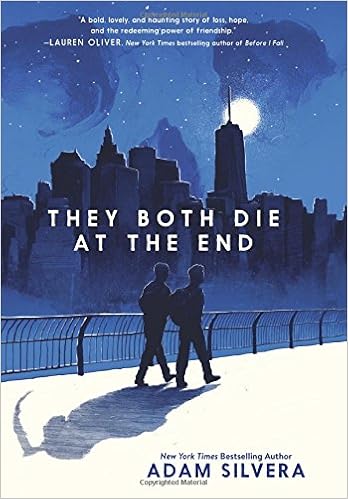
Review: They Both Die at the End by Adam Silvera

Title: They Both Die at the End
Author: Adam Silvera
Publisher: HarperTeen
Release date: September 5th 2017
Pages: 373
Genre: Young Adult contemporary
Source: Purchased
Add to Goodreads | Purchase from Bookshop
On September 5, a little after midnight, Death-Cast calls Mateo Torrez and Rufus Emeterio to give them some bad news: They’re going to die today.

Mateo and Rufus are total strangers, but, for different reasons, they’re both looking to make a new friend on their End Day. The good news: There’s an app for that. It’s called the Last Friend, and through it, Rufus and Mateo are about to meet up for one last great adventure—to live a lifetime in a single day.


I've been meaning to read Adam Silvera's books, and I absolutely love the title (and concept of this one)--I really hate happy endings (I know, what is wrong with me, but I will take a realistic ending that makes me bawl over a happy ending any day), so I was really excited for this one--this novel promises to break your heart, and it really does not disappoint.

While the emotions and the message were what I was expecting, the worldbuilding ended up being very different from what I'd anticipated. I was expecting this to be speculative fiction set in the future, but this book is actually set in an alternate present (in 2016 or 2017, I forget). At first, I was taken aback by that choice--I thought it was confusing and unrealistic that everything in this society is the same as in ours except that the Death-Cast exists. Especially one conversation between Rufus and Mateo, where they talk about what all will be outdated soon, which is entirely accurate for our present day, felt strange to me--how has this society made no other technological strides, but has managed to develop some kind of technology that can infallibly predict when you will die? Especially because the Death-Cast has existed for almost ten years in this alternate universe, and because society has developed lots of new businesses, such as the Last Friend App and lots of activities designed for Deckers (people living out their last days), it just seemed strange to me that everything else would be exactly the same in this world. After a while, though, I got used to this idea, and I appreciate that this alternate present, more so than a dystopian future setting, allowed Silvera to represent the lives of Latino youth in present-day New York City, in a way that really shaped the story.


Regardless of when exactly the Death-Cast were to happen, though, I wish there had been some more discussion of how exactly these predictions work. I understand that the novel focuses almost exclusively on Mateo and Rufus and is more about how Death-Cast impacts individual lives than about how it works, and it makes sense that we wouldn't know much since the characters themselves don't know how this technology works. But I couldn't help but question the practicalities of this technology. For example, I kept wondering how much receiving that Death-Cast call might impact what you do that day and therefore whether or not you die. The characters continuously mention that Death-Cast is infallible, and that there is absolutely no way to escape death once you receive the call. At the same time, though, there is a scene where one of the characters learns about world history BDC (Before Death-Cast) in school, and is asked to imagine how events such as 9/11 may have played out differently if Death-Cast had already existed, but how that would look like is never explained. If so many people who work in the same place were to receive the call, wouldn't many of them not have gone to work that day? But then, since Death-Cast is infallible, would they just have died some other way instead? While of course Death-Cast can allow you to live your last day to the fullest and can give you a chance to say goodbye, I didn't quite understand how it would impact historical events in any way. Additionally, I found the concept that you always get the call between midnight and 3am kind of strange. I understand the practicalities of this, of course--the Death-Cast employees receive a list of people to call at midnight, and then begin to make their way through the list until they finish at 3am. But, what about the people who die at, say, 1am? They might never be notified, which didn't seem to fit with the way the characters talk about not receiving the call as a surefire way to know you won't die today. While these are just details, I do wish that there had been some more exploration of how choice and fate relate in this universe, and how your choices might impact whether and how you die on a certain day.


Nonetheless, this novel is not so much about constructing a logical alternate universe, and more so about the characters and a message that applies in our universe as well. And all of that, I absolutely loved. I loved the writing and the pacing of the whole novel--the suspense was really well-done, and I was consistently paranoid about how either character could die at any moment. (This novel might not be ideal for anyone who already struggles with death-related anxiety--this same paranoia about Rufus and Mateo dying at any moment reappeared in my dreams for the next couple of nights after finishing this novel.) Even asides from the looming death of the two central characters, this is an emotional read; both Rufus and Mateo's families have tragic stories,  and the flashbacks to their circumstances and their contemporary goodbyes made me tear up throughout the novel. 


I also really loved how, in addition to switching back and forth between Mateo's and Rufus's PoVs, the reader got intermittent chapters from secondary characters or even complete strangers, who later turned out to be vaguely related to the central storylines. Those chapters really demonstrated how all of our stories connect and how seemingly small choices can really make an impact, and worked really well for the novel's message about making the most of our lives while we can.


***This next paragraph is vaguely spoiler-y, although you wouldn't be surprised by this "twist" if you've read Silvera before.***

I still haven't decided what to make of the love story or whether or not I'm sold on it. I was expecting the romance element because I know Silvera usually writes M/M love stories, but if I had come into this novel without those expectations, I think Rufus's and Mateo's first kiss (or Rufus's first suggestions that this might happen) would have taken my by surprise and it would have felt a little random in the context of the rest of the story. Part of me really likes the idea of not a love story, but something that could have been a love story if the two had had the opportunity to know each other for longer. So the elements that framed their relationship in that way, I liked, but some other parts I felt were a little overdone and a little too insta-love-y. Although I guess even those parts aren't unrealistic, since both characters know they are going to die and this is their only/last chance at love. Another part of me, though, just doesn't see Rufus and Mateo together in that way; to me, Rufus seemed like more of a big brother to Mateo before the romantic element to their relationship was introduced. It might just be my own heteronormativity that didn't allow me to see these two as romantic partners for one another (I think most people would have expected romance from a YA novel with the same concept about a boy and a girl), but I just didn't see them as compatible. I also think it could have been really cool for this novel to center a friendship between two queer boys (Rufus identifies as bisexual, and I've seen lots of other people label Mateo as gay, but I don't remember Mateo ever actually identifying as anything?). Despite all of this, I don't really mind the romantic storyline because it feels realistic, under the circumstances.

While I did have a lot of questions, I really loved this book. If you're looking for a thought-provoking  tearjerker with a unique concept, you should definitely check out They Both Die at the End. I will definitely be reading Silvera's other novels!

Monday, July 27, 2020

Review: Simon vs. The Homo Sapiens Agenda by Becky Albertalli

Title: Simon Vs. The Homo sapiens Agenda

Author: Becky Albertalli
Publisher: Balzer & Bray
Release date: April 7th 2015
Pages: 303
Genre: Young Adult contemporary
Source: Purchased
Add to Goodreads | Puchase from Bookshop
Sixteen-year-old and not-so-openly gay Simon Spier prefers to save his drama for the school musical. But when an email falls into the wrong hands, his secret is at risk of being thrust into the spotlight. Now Simon is actually being blackmailed: if he doesn’t play wingman for class clown Martin, his sexual identity will become everyone’s business. Worse, the privacy of Blue, the pen name of the boy he’s been emailing, will be compromised. With some messy dynamics emerging in his once tight-knit group of friends, and his email correspondence with Blue growing more flirtatious every day, Simon’s junior year has suddenly gotten all kinds of complicated. Now, change-averse Simon has to find a way to step out of his comfort zone before he’s pushed out—without alienating his friends, compromising himself, or fumbling a shot at happiness with the most confusing, adorable guy he’s never met. 


I know I'm super late to this party, but... what an adorable book! I watched Love, Simon a while ago and bought this book because I loved the movie, but then never actually got around to reading it. After watching the spin-off series Love, Victor (which I loved even more than the original movie; so cute!!), I decided to finally read the book that started this franchise. And I was not disappointed!

I loved Albertalli's writing style, in particular the dialogue and Simon's internal dialogue. It took me a little time to get used to because it's different from what I usually read, but after a somewhat slow beginning, I loved everything about it. Albertalli's writing and dialogue are witty and endearing, but not in an unrealistic John-Green-type of way (not that I don't love John Green's writing--but.. I don't know any real people who talk like his characters), but in a way that felt entirely relatable and realistic. There are so many hilarious and insightful pieces of dialogue and Simon's thoughts in here that I absolutely loved. Because the writing is so great, I honestly didn't even care what happened; I'm sure this book would have been even more of a page turner if I hadn't already seen the movie and known who Blue was/how the story would end, but I couldn't put the book down regardless, because the writing is so captivating and brought elements of this story to life that the movie couldn't capture.

I also loved the characters. Simon does plenty of things that are not okay, and admits to not always being the best person, like when he realizes how little he knows about his friends' lives. But none of those flaws make him a less lovable character; he is a completely realistic teenage boy, and I loved him. Blue is also an adorable character, and I the romance and chemistry between them through their emails is incredibly well done. I also loved him family dynamic and especially his relationship with his sisters. 

To be honest, I was a little suspicious of this book because it was written by a heterosexual white woman and, if the identities were accurately represented in the movie version, it would be primarily about teens of color and a white gay boy. I was worried that this would be another case of the characters' races not even being mentioned or being mentioned in passing but having nothing to do with the story and not being addressed at al. However, I was pleasantly surprised by this book's discussion of race. This is one of the few YA books I know that were white author about a white protagonist where secondary characters' races are actually discussed and addressed in a more meaningful way than just a passing comment on someone's skin color. Race definitely still isn't discussed enough in this book, but it is addressed a few times in a way that doesn't reduce race to skin color or diversity but actually addresses the histories of racism. While of course this can't replace #ownvoices stories, I do think that this is a step in the right direction in terms of what white authors can do to not just make their books "diverse," but to actually incorporate discussions of race and racism into their work. And asides from one comment about "coming out" being easier for girls, which I think is a little simplistic, I did really like the discussions of homosexuality as well.

I really loved everything about this book; this is such a cute, fun story that still addresses some important issues. I can't believe I waited this long to read it! I definitely need to catch up on the rest of the Simonverse novels.

Monday, July 13, 2020

Review: Let's Talk About Love by Claire Kann


Title: Let's Talk About Love

Author: Claire Kann
Publisher: Swoon Reads
Release date: January 23rd 2018
Pages: 304
Genre: Young Adult contemporary
Source: Purchased
Add to Goodreads | Puchase from Bookshop
Alice had her whole summer planned. Nonstop all-you-can-eat buffets while marathoning her favorite TV shows (best friends totally included) with the smallest dash of adulting--working at the library to pay her share of the rent. The only thing missing from her perfect plan? Her girlfriend (who ended things when Alice confessed she's asexual). Alice is done with dating--no thank you, do not pass go, stick a fork in her, done. But then Alice meets Takumi and she can't stop thinking about him or the rom com-grade romance feels she did not ask for (uncertainty, butterflies, and swoons, oh my!). When her blissful summer takes an unexpected turn and Takumi becomes her knight with a shiny library-employee badge (close enough), Alice has to decide if she's willing to risk their friendship for a love that might not be reciprocated--or understood.  

This is such an important book! I don't know many YA books (or any books) about asexual teens, and definitely none about a Black biromantic asexual girl, so the sheer existence of this novel is great to see. When you add a unique and entertaining writing style and a lovable main character into the mix, you end up with an equally fun and important novel.

I loved Alice's character and the writing style of this novel, which are hard to separate because, even though the novel is written in third-person, the writing is very much shaped by Alice's personality. I would love to be Alice's friend; even though she makes her fair share of mistakes, she is one of the most endearing characters I've read about in a while. Her strong personality, penchant for all things cute and romantic, and pop culture-influenced way of speaking closely shape the writing, which is very informal, using internet-speak (for lack of a better term?) and tons of parentheses for additional commentary. I could see how this writing style would get on some people's nerves, but I loved it!

I loved the secondary storylines of this novel, primarily the exploration of Alice's relationship with her friends and her parents. Both her friends and her parents were infuriating at times, but their relationships were definitely realistic. I especially liked the exploration of Alice's jealousy of the relationship between Feenie and Ryan, her two best friends who are engaged to each other--even though Feenie pissed me off throughout the novel, to be honest. Why was she mad at Alice for leaving a party after she went upstairs to go have sex with Ryan (honestly, do you really need to have sex with your fiancé, whom you live with, in someone else's bedroom while you are at a party with both him and your best friend??), especially when Alice was cornered by a scary abrasive guy at this party after her friends left her? I was not the biggest fan of the way Feenie was not held accountable for this and the way the novel made it seem like both Feenie and Alice made mistakes, because yes, but.... I was 100% team Alice. But regardless, the exploration of these conflicts was realistic and well done.

Since I'm not asexual, I cannot judge the accuracy of the portrayal of asexuality, but I will say that I learned a lot about asexuality by reading this novel, and I think someone who doesn't know a lot about asexuality would really benefit from Alice's explanations of her sexuality. I was especially interested in the way Alice navigated her relationships with partners who are not asexual, and I'm not sure what to make of the novel's take on this. In the beginning, Alice's ex-girlfriend Margot breaks up with Alice because Alice does not want to have sex with her and Margot wants to be with someone who actively desires her. In the process, Margot does say some ignorant things about it being unnatural not to desire sex, which is of course aphobic, but asides from these statements, I don't know how to feel about the novel's vilification of her character. I do think that sexual incompatibility is a legitimate issue and that wanting to be with someone you are sexually compatible with makes sense. Even though I of course understand that Alice shouldn't need to have sex just to please her partner, I also don't know if you can expect an allosexual person to give up sex in order to date someone asexual, especially if feeling sexually desired by their partner is important to them. To me, this seemed like a legitimate reason for Alice and Margot to not be compatible and to break up, so I was a little taken aback by the novel's vilification of Margot's decision as a refusal to accept Alice as she is. Is this just my allosexual bias/privilege talking? This seems like a complicated issue with no easy answers to me.

I also had mixed feelings about Alice's and Takumi's relationship. On the one hand, I thought they were super cute together, and I loved the exploration of romance as separate from sex. On the other hand, their relationship moves really fast, and did seem a little insta-love-y to me--or maybe not insta-love, but insta-we are best friends together 24/7 now, since they do take a while to actually get together. And, honestly, if it hadn't been for the way this works in conjunction with the exploration of asexuality, this level of romance would have been a little too much to handle. In some ways, though, it felt like the novel was self-aware in this sense, since Feenie calls Alice out on abandoning her friends and spending every day with Takumi as soon as they meet, so maybe this was an intentional exploration of Alice's character. Regardless, I did like the romance; it's very sweet, even if it moves very quickly. I do wish, though, that the ending had been less rushed--especially since Takumi's handling of Alice's asexuality is contrasted to Margot's, I would have liked to see how they handle this as their relationship progresses. Takumi (who is allosexual) saying he's okay with sex not being a part of your relationship seems easy enough at first, but harder to actually deal with in a long-term relationship, so especially because a nuanced exploration of this seemed to be missing from the beginning of the novel, I would have liked to see this discussed in more detail at the end. 

Regardless of these smaller issues, this novel definitely sparks a lot of interesting conversations about asexuality (not to mention its discussion of race, feminism, and biromanticism). Alice is a lovable character, and Kann's writing style and voice are very entertaining. I'm definitely going to check out Kann's newer novel soon!

Tuesday, July 07, 2020

Review: Blanca & Roja by Anna-Marie McLemore

Title: Blanca & Roja

Author: Anna-Marie McLemore
Publisher: Feiwel & Friends
Release date: October 9th 2018
Pages: 375
Genre: Young Adult; magical realism; retelling
Source: Purchased
Add to Goodreads | Puchase from Bookshop
The del Cisne girls have never just been sisters; they’re also rivals, Blanca as obedient and graceful as Roja is vicious and manipulative. They know that, because of a generations-old spell, their family is bound to a bevy of swans deep in the woods. They know that, one day, the swans will pull them into a dangerous game that will leave one of them a girl, and trap the other in the body of a swan.

But when two local boys become drawn into the game, the swans’ spell intertwines with the strange and unpredictable magic lacing the woods, and all four of their fates depend on facing truths that could either save or destroy them. 


Anna-Marie McLemore's books are one of a kind. Their books took a little while to grow on me--when I first read When the Moon Was Ours, my first McLemore book, I had no idea what to make of it, other than thinking it was beautiful and confusing, since their books are so different from what I'm used to reading. But if you go in with no expectations and just accept the queer, magical realism-influenced retellings McLemore writes for what they are, I think there's no way not to love them.

Blanca and Roja are the youngest daughters in the del Cisne family, a family that was cursed by swans a long time ago to always have two daughters, one of whom will survive as a girl while the other is turned into a swan. While we get some speculation as to how this came about, there is no explanation of this "magic"; you just have to accept that this is the way things are for Blanca and Roja. And even though this might seem like a strange idea for a story, it makes for a very compelling read that allows McLemore to explore sisterly love, colorism, gender identity, and much more.

I never know what how to review the characters of McLemore's novels, because I wouldn't say that I like any of them or that any of them are realistic or fully developed, but those stock terms just don't really apply to McLemore's stories. Blanca and Roja just are, and it works. The secondary characters are similarly clouded by mystery and magic, and I loved the way the narration switches between the four central characters.

McLemore's unique story allows for a powerful exploration of how colorism deeply shapes a small, predominantly white town's perception of this Latinx family, as well as Latinx communities themselves. Blanca, with her blonde hair and golden complexion, can sometimes pass for white, and abides by societal expectations, while Roja, with her brown skin, red hair, and rebellious attitude, is feared and reviled by the town. McLemore beautifully explores how deeply these differences shape their experiences, their relationship with one another, and their relationship with their parents. My only issue with the character building is the family's assumption that because Blanca is the more conventionally beautiful (by white beauty standards), more demure and "respectable" sister, that she would be spared by the swans and that they would take Roja, the rebellious sister, instead. Wouldn't the swans want Blanca, the sister who is perceived as "better," especially because she would fit in better with the white swans? I was confused by this element of the world building.

McLemore also weaves explorations of gender and queerness into their stories in a very unique way. Page, Blanca's love interest, is a non-binary transgender boy who uses both male and female pronouns. While Page's gender is not the central topic of the novel, the text makes space for some important conversations between Blanca and Page exploring nonbinary identities.

What really stands out about this novel, as with all of McLemore's novels, is the writing. Even in the beginning, when I honestly had no idea what was going on, I enjoyed every single one of McLemore's beautiful words; their writing is the kind you can get lost in regardless of the story--even though they always do lead you back to a fantastic story.

If you enjoy magical realism, or if you're looking for something different, or if you appreciate beautiful writing, or if you like fairy tale retellings, or if you like queer books (so... basically everyone?), I highly recommend this book! I need to catch up on the McLemore novels I haven't read yet.

Related Posts Plugin for WordPress, Blogger...